
Editor’s Note: A version of this story was featured on CNN’s Meanwhile in China newscast, in an update that aired three times a week, exploring what you need to know about the country’s rise and how it has impacted the world. Sign up here.
Hong Kong
CNN
–
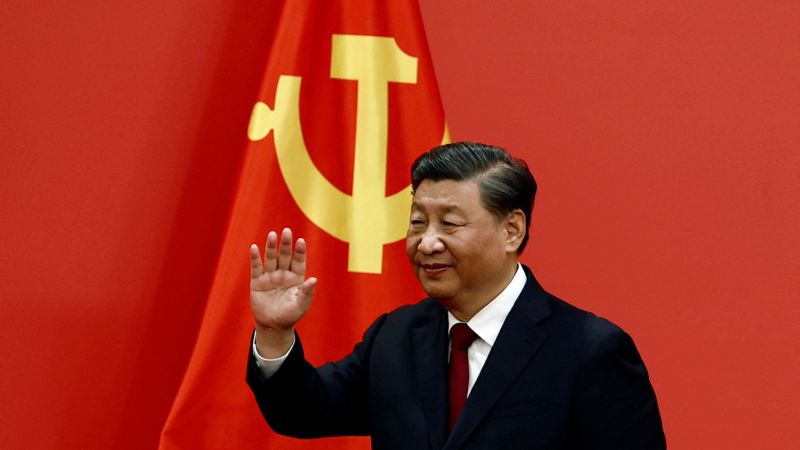
It was a moment when Xi Jinping took the red carpet stage on Sunday to begin his norm-shattering third term as China’s supreme leader.
Xi, 69, emerged stronger than ever from the five-year congress of the ruling Communist Party, bringing together his party’s top echelons with longtime patrons and loyal allies.
This loyal inner circle not only strengthened Xi’s stance in power, but also tightened his control over China’s future. The country’s trajectory is shaped by the vision and ambition of one man, to a degree not seen in decades, and there is minimal room for dissonance or readjustment at the height of the party’s power.
In Xi’s eyes, China is closer than ever to fulfilling its dream of “national rejuvenation” and reclaiming its rightful place in the world. But the road ahead is also beset by “strong winds, choppy waters and even dangerous storms” – Xi issued a dark warning both at the beginning and end of the week-long congress.
According to Xi’s working report to the congress, the escalating difficulties arose from a “brutal and complex international situation”, with the threat of “escalation at any moment” by “foreign attempts to subdue and contain China.”
Observers say Xi’s response to this darkening outlook is to intensify fierce defense of China’s national interests and security against all perceived threats.
“Xi is likely to tightly control and participate in all major foreign policy decisions. Bringing China’s top leadership together with loyalists will allow it to better control and exert influence,” said Bonny Lin, director of the China Power Project at the Center for Strategic and International Studies (CSIS).
What he decides to do and how he does it will have a profound impact on the world.
Xi is stepping into his next period of power, which faces a significantly different landscape from his previous two terms. The relationship between China and the West has changed dramatically as US-Chinese relations have faced a trade and technology war, frictions over Taiwan, Covid-19, Beijing’s human rights record, and Russia’s refusal to denounce its war in Ukraine.
The working report, a five-year plan of action that Xi presented during the congress, pointed to “drastic changes” in the international landscape, including “external blackmail, containment, blockade, and attempts to exert maximum pressure” on China – frequented by the Chinese. The terms used diplomats condemned the actions of the United States.
“It is clear that Xi sees China entering primarily a period of struggle in the international arena rather than a period of opportunity,” said Andrew Small, author of “No Limits: The Inside Story of China’s War with the West.”
The expectation that ties will worsen results in “a China that is much more openly involved in systemic competition with the West – more assertiveness, more ideologically hostile positions, more effort to build its own counter-coalitions, and a greater impetus. “To support China’s position in the developing world,” he said.
These pressures are also likely to affect Beijing’s close relationship with Moscow. While China has tried to appear as a neutral actor in the war in Ukraine, it has refused to denounce Russia’s invasion and instead blamed the West for the conflict – a dynamic that is also unlikely to change.
“(Xi) seems to have already erased most of the costs incurred for China’s relations with the West and especially Europe,” Small said.
When Xi promised to “reunify” the mainland with Taiwan at the opening of the convention on October 16, he received the loudest and longest applause from the nearly 2,300 carefully selected delegates in Beijing’s Great Hall of the People – a self-governing self-government, as Beijing claimed. democracy. it’s his own, although he’s never controlled it.
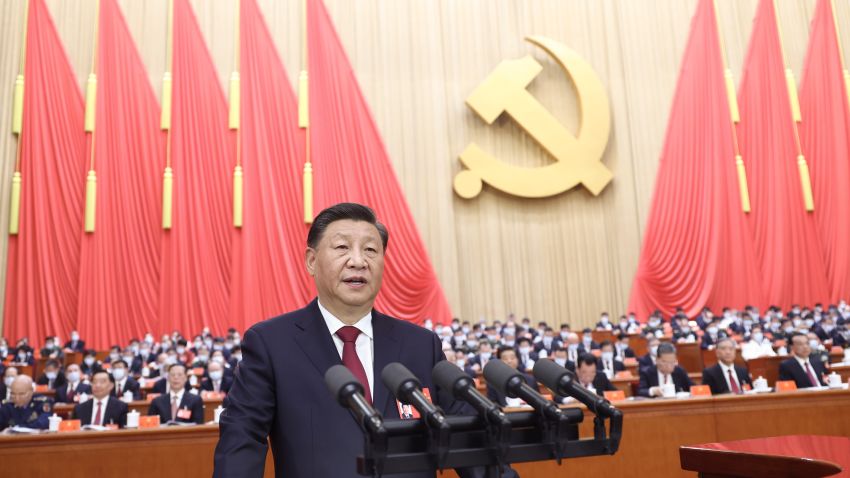
Hear the dire warning that brought a roaring applause to Xi Jinping during the speech
Xi said China will “endeavor for peaceful reunification”, before giving a stern warning that Beijing will “never give up on the use of force”.
“The wheels of history are rolling towards the reunification of China and the rejuvenation of the Chinese nation. “The complete reunification of our country must be achieved,” he said.
Under Xi, Beijing increased military pressure on Taiwan, sending warplanes and holding military exercises near the island. Concerns over Beijing’s Taiwan plans have grown after China’s tacit support for Russia’s invasion of Ukraine.
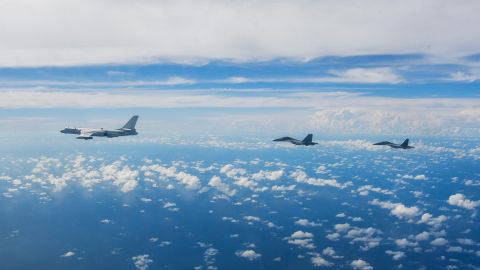
CSIS’s Lin said Xi’s study report did not reveal a major change in Beijing’s policy towards Taiwan, but the change in leadership in the Chinese military may provide clues to its “desire to make more ‘progress’ on reunification with the island.”
He Weidong, former commander of the People’s Liberation Army’s Eastern Theater Command, which oversees the Taiwan Strait, was unexpectedly promoted to vice-chairman of the Central Military Commission, although he had never served before.
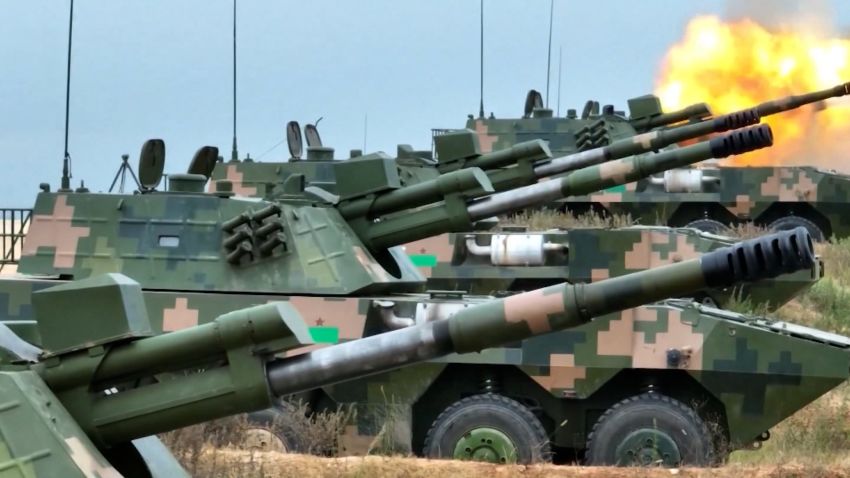
See why China’s threat to Taiwan is ‘big and urgent’
“This shows that Xi takes the possibility of a military crisis or conflict very seriously and wants to ensure that the PLA is ready,” Lin said. “I don’t believe Xi is determined to use significant force against Taiwan, but he is taking steps to prepare for it,” he said.
Xi’s work report also outlined China’s ambition to become more adept at deploying its military forces regularly and in a variety of ways to enable it to “win local wars.”
“Xi clearly wants the PLA to have the ability to win a war for control of Taiwan if it chooses to do so, whether or not by their calculations this is really a risk worth taking. “This is always a top priority,” said Small, a senior transatlantic researcher at the German Marshall Fund think tank.
Small pointed to a number of crossroads of risk for a escalation in the Taiwan Strait in the coming years, including the island’s next presidential election in 2024.
“Still, the fact remains that the PLA has not been severely combat-tested for decades, and one of the questions ahead is whether they will be able to prepare themselves effectively for it,” he said.
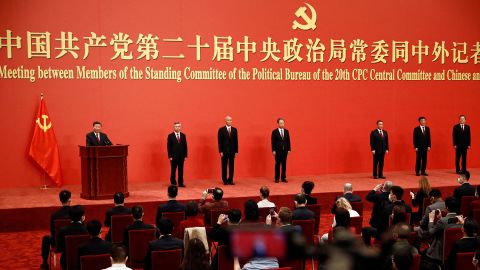
In a televised speech on Sunday after announcing his new leadership team, the party’s Politburo Standing Committee, Xi said China’s gateway to the world will “only expand” and that the country’s development itself will “create more opportunities for the world.”
“China cannot develop in isolation from the world, and the world needs China to develop,” he said.
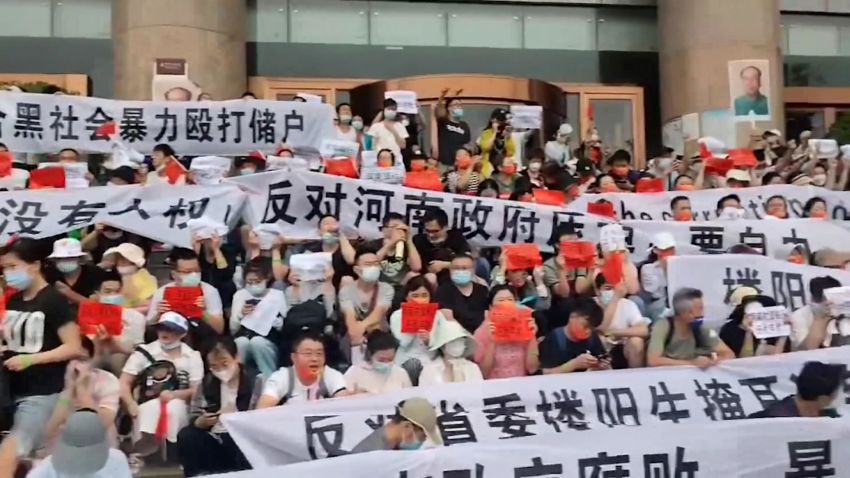
China’s once vibrant private sector is suffocating under pressure from Xi
But today, China is more physically closed than it has been in decades. Xi continues to support the costly zero Covid policy, which heavily restricts borders and regularly quarantines its cities, dragging down China’s economic growth.
Xi’s commitment also appears to have done little to reassure investors. On Monday, the Hong Kong stock market, which lists many of China’s largest companies, had its worst day since the 2008 global financial crisis. Two of China’s leading tech giants, Alibaba and Tencent, both lost more than 11% in value, wiping out a total of $54 billion in market capitalization.
The stakes are high in how the world’s second-largest economy will cope with these challenges, especially as the risk of a global recession looms.
According to Victor Shih, an expert on elite Chinese politics in China, Xi’s obvious interest in integrating domestic and international security “could translate into policies such as sanctions against foreign companies (and) more bureaucracy when there is foreign investment in Chinese tech companies.” University of California San Diego.
While Xi said advancing China’s “international standing and influence”, including supporting global development, is among its key goals for the next five years, Beijing may no longer rely on the same level of economic engagement to do so. in a more divided world.