

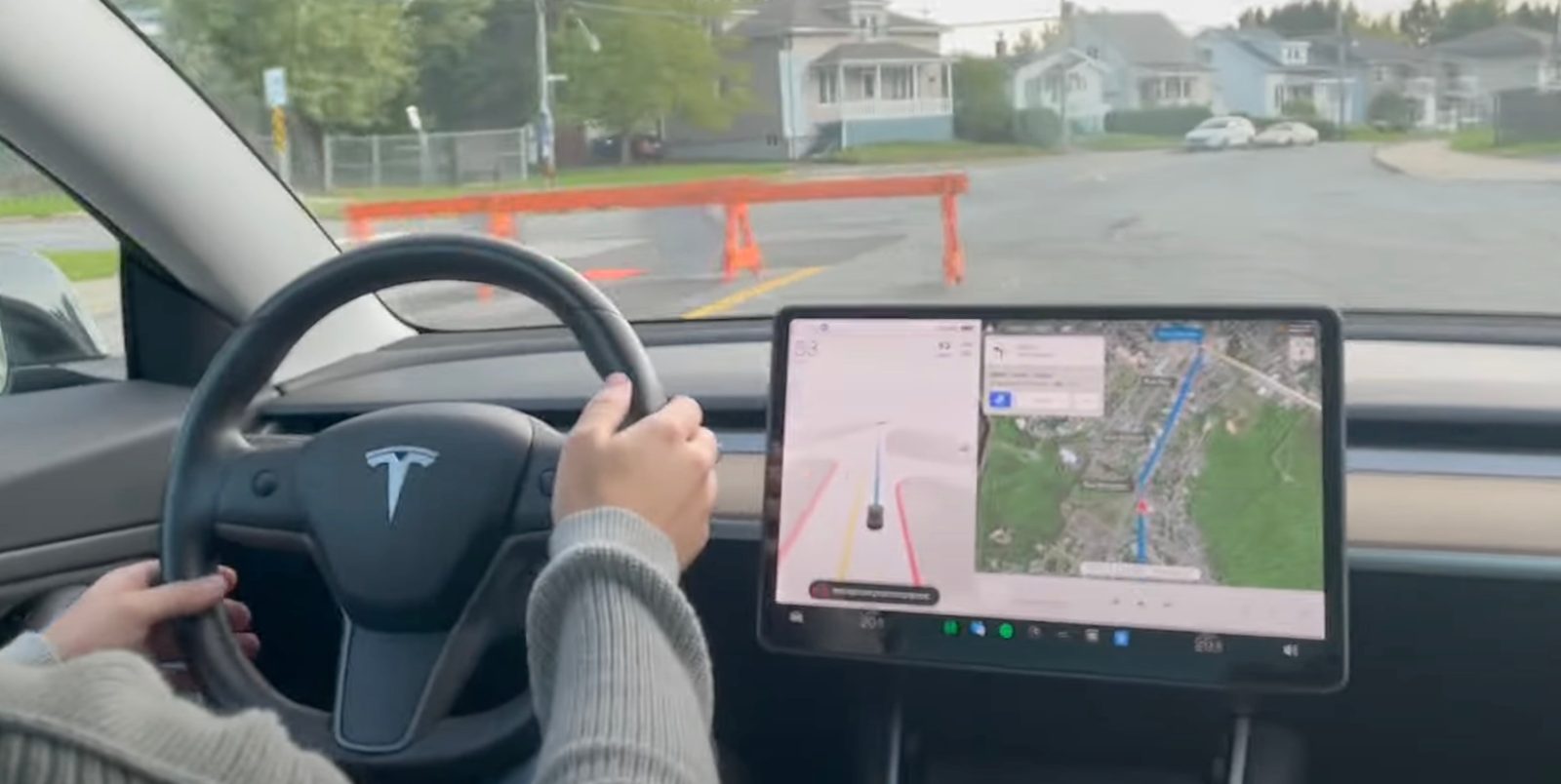
What little data is coming out of Tesla’s Full Self-Driving Beta looks awful, and that’s putting it mildly.
We challenge Elon Musk to prove otherwise by releasing data on driver disengagement and intervention.
To be clear, the Tesla Full Self-Driving Beta data in this article is minimal and therefore cannot be fully representative of actual capability.
But that’s the point of the article. Unfortunately, it’s the best data available because Tesla has gone to great lengths to not release disengagement data that other companies developing autonomous systems are making available.
A disengagement consists of disengaging the system, either by you or the driver, to avoid hazards or comply with road rules. Miles between disengagements have been useful data for tracking the progress of autonomous driving programs.
It’s not a perfect metric for tracking progress, but it’s one of the only ones we have right now and we should see improvements in it over time with more kilometers between tripping or driver intervention.
While Tesla doesn’t release the data, a group of Tesla FSD Beta testers have been reporting the data for some time now, and Taylor Ogan of Snow Bull Capital has been tracking them to see the progress.
According to the data, disengagement miles driven have dropped 54% since March and are currently at the same level as they were at this time last year:
Based on this again limited dataset, the Tesla FSD Beta can only drive a few kilometers between disengagements, whereas other autonomous driving programs like Waymo and Cruise report tens of thousands of kilometers between disengagements on average.
These results are disappointing as they point to very little or no progress in the FSD Beta program over the past year – at least based on this metric.
A few miles between disengagement has been my experience with the Tesla FSD Beta in my own car.
If this is not true, please prove it, Elon
Now, that’s based on 72,000 miles of self-reported data, compared to over 60 million miles driven in the FSD Beta to date.
So I’m completely open to the idea that the larger dataset shows different results, but there’s no way to know unless Tesla releases that data. It’s not clear why the company isn’t doing this.
To be clear, I’m not asking Tesla to release any sensitive information about the program here, just data that every other company developing self-driving programs has voluntarily shared for years.
The data was used to help build confidence in these systems – some of which are already commercially deployed in California and Arizona.
Instead, Tesla CEO Elon Musk has repeatedly told people to “try the FSD Beta for yourself” to gauge their progress. As if anecdotal evidence is any better at tracking progress than hard data on disengagement miles.
At this point, it’s hard not to suspect the possibility that the reason Tesla isn’t releasing the data is that it looks bad for them – especially compared to Waymo and Cruise.
But how else can we gain confidence in the system if we can’t see any tangible data pointing to improvements?
This is not coming from an enemy or a short TSLA. This is coming from someone who paid good money for the Tesla Full Self-Driving Capability package and who is losing faith in the company delivering on its promise.
So Elon Musk, release the Tesla FSD Beta data and show a way to fulfill your promises. Otherwise, we have to rely on this data to track progress, and that doesn’t look good.
FTC: We use automatic affiliate links for income generation. Most.