
When reporters or analysts ask Litter CEO Tim Cook on a controversial and thorny issue facing the iPhone maker abroad, he often says that Apple follows the law in every country where it operates.
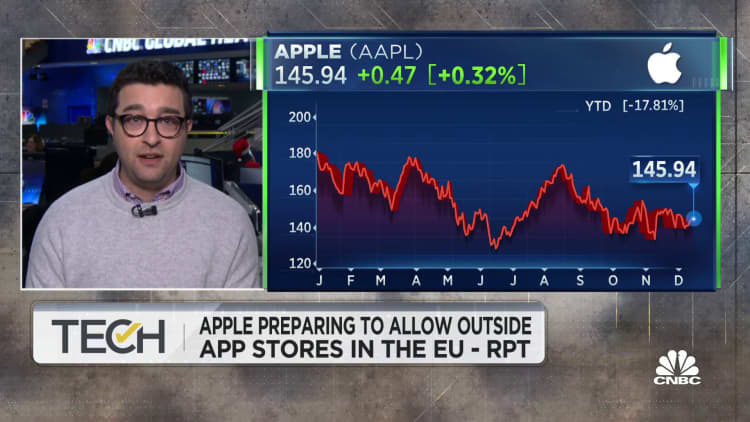
Now, Apple is reportedly working to enforce a law that could force major changes to the iPhone and disrupt Apple’s lucrative app distribution model.
Apple is developing software to comply with new European Union requirements scheduled to take effect in 2024, according to Bloomberg News. Nothing is set in stone, but Apple is considering changes, including allowing third-party browser engines, giving wallet apps access to the phone’s NFC chip, and changing the charging port to USB-C from the company’s proprietary Lightning connector, according to the report.
These changes would address long-standing consumer complaints and give third-party apps – including mobile wallets like paypalVenmo and mobile browsers like Google Chrome — a better chance to compete with Apple’s built-in apps. The USB-C charger switch would mean most people could pack a charger for their phone and laptop.
But the biggest change reported is that Apple is working to allow direct downloads or “sideloading” of apps from the web, including potentially third-party app stores, for iPhones.
Currently, the iPhone App Store is the only way to download software for iPhones.
At first glance, this seems to address the biggest antitrust complaint Apple has faced in the past decade. Apple makes a lot of money from its App Store, which reduces digital sales made through any distributed application by up to 30%.
Many companies, including Coinbaseepic games, Match🇧🇷 goal🇧🇷 Microsoft🇧🇷 Spotify and twitter, complained about Apple’s fees and the fact that Apple can delay updates or remove an app for violations of App Store policy. Both Match and Spotify shares rose in Tuesday’s report.
But developers have to wait to check the fine print on an official announcement before celebrating.
For starters, the changes could only take effect in Europe, according to Bloomberg News.
It’s not a small market, but Europeans spend less on iPhone apps than Americans. Of the estimated $85 billion Apple’s app store has raked in so far this year, spending on iOS apps in the EU has reached around $6 billion, according to an estimate by Data.ai, a company that tracks downloads. and application spending. According to the same estimate, the American store was responsible for about US$ 29 billion.
In the very unlikely worst case scenario for Apple, if alternative app stores in Europe resulted in a total loss of App Store sales in the region, it would only hurt Apple’s services business by around 4%, its total revenue by around of 1%, and its earnings per share at 2.5%, according to a Morgan Stanley estimate published on Wednesday.
Apple reported $394 billion in total sales, with $78 billion coming from services, in its 2022 fiscal year, which ended in September.
The US has proposed similar legislation, the Open App Markets Act, which is currently being debated in Congress.
How Apple Can Still Make Money From Apps
Even if EU law forces Apple to break the App Store’s control over distribution, the company could still find a way to charge fees for apps distributed in other ways.
In a test with Epic Games last year about App Store policies, Apple representatives argued that App Store fees pay for intellectual property — the software tools developers use to make apps for the iPhone — not only by distribution. Applications distributed over the web would likely still use Apple’s programming interfaces.
Apple also argued that the App Store is important for customer security because software that Apple has not verified can steal personal data or payment information. So if Apple opens up the iPhone to third-party apps or app stores, there are likely to be security requirements for developers.
For example, Apple may require developers who wish to distribute applications outside of the App Store to enroll in programs to gain access to the specific programming interfaces that make this possible or to ensure that they meet certain security requirements. It may also require app makers to display a warning popup if their apps are not distributed by Apple.
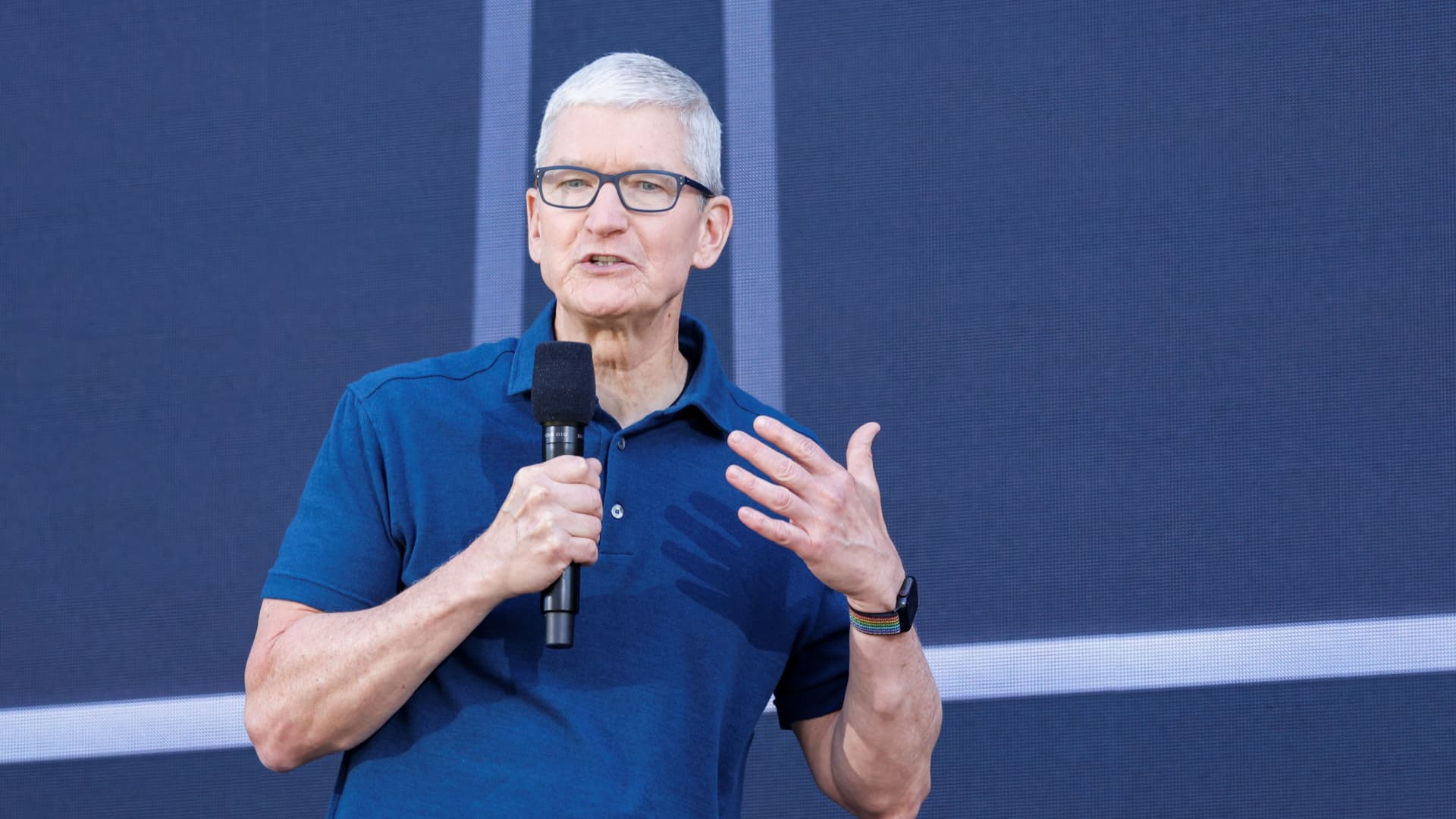
Apple CEO Tim Cook speaks during the Apple Worldwide Developers Conference in San Jose, California on June 6, 2022.
Pedro Dasilva | Reuters
Apple’s actions in South Korea provide an instructive example. Earlier this year, a legal ruling forced Apple to allow apps distributed through the App Store to charge their customers directly, rather than using Apple’s own payment system.
But Apple still found a way to collect fees there. Apple required apps that took advantage of the new policy to pay a 26% commission, just a small discount off the standard 30%.
Apple did this by requiring app makers to provide a report in spreadsheet format describing each in-app transaction during the month and collecting a portion of those purchases. Apple reserved the right to audit developers’ books.
Apple was able to enforce its system because it still controlled the App Store for distribution, and developers had to agree to its terms of service to get any distribution. In this case, the app makers had to ask Apple for the “right” to allow their own payment processing and agree to the spreadsheet and billing system that Apple created. (South Korea is investigating Apple to see if its system violated its new law.)
Apple also required apps that benefited from this policy to display a message saying “This app does not support the App Store’s private and secure payment system”.
If Apple uses similar tactics in Europe, it could lead European consumers to believe that the App Store is the safest and best place to get iPhone software. Or developers may conclude that it’s too complicated to look for alternatives.
“Apple customers have long prioritized the security, centralization and convenience that the App Store brings,” Morgan Stanley’s Erik Woodring wrote in a note on Wednesday.
The details of how Apple will implement these changes will depend on how its lawyers interpret the Digital Markets Act. Apple has also routinely exhausted all available legal remedies when it comes to challenging its App Store model, including appeals, according to the Morgan Stanley note.
Apple declined to comment.
🇧🇷